Contents:
- How We Chose the Best Flowers for a Baby Girl
- Pink Peonies: Prosperity and a Happy New Beginning
- What Makes Peonies Work for a New Mom
- Where to Order Pink Peonies
- Light Pink Roses: Gentleness, Admiration, and Joy
- Standard Roses vs. Garden Roses
- Rose Bouquets That Suit the Occasion
- Blush Ranunculus: Radiant Charm in Tight Layers
- Ranunculus vs. Peony: The Commonly Confused Pair
- Ranunculus Arrangements Worth a Look
- What the Pros Know
- Pink Hydrangeas: Heartfelt Gratitude in a Single Stem
- Hydrangea Strengths and Weaknesses
- Baby’s Breath: Innocence and Everlasting Love
- Lisianthus: Appreciation and a Quiet Rose Lookalike
- Pink Orchids: Grace, Love, and a Gift That Keeps Blooming
- Flowers to Avoid for a Baby Girl’s Arrival
- Quick Summary: Best Flowers to Welcome a Baby Girl at a Glance
- Our Recommendation: Match the Bouquet to the Setting
- Frequently Asked Questions
- What color flowers are best for a baby girl?
- Can you send flowers to a maternity ward?
- How long should I wait to send flowers after a baby is born?
- How much should I spend on new baby flowers?
- Are any flowers unsafe to have around a newborn?
A popular belief holds that choosing the best flowers to welcome a baby girl is simple: pick anything pink, add a bow, and you are done. Two parts of that idea do not hold up. First, pink has not always belonged to girls. A 1918 trade publication, Earnshaw’s Infants’ Department, advised pink for boys because it was “more decided and stronger,” and the pink-for-girls convention only settled in the United States around the middle of the twentieth century. Second, color is the least important thing about a new-baby bouquet. Fragrance, pollen, size, and vase life decide whether the flowers delight a tired mother or get quietly moved to the nurses’ station.
This guide sets the record straight. It covers what each soft bloom actually means, how long it lasts, where it works well, and where it does not. The flower meanings come from documented traditions, mostly the Victorian language of flowers and older European and Asian customs, not from greeting-card invention.
How We Chose the Best Flowers for a Baby Girl
Every flower on this list was measured against five practical questions. A bloom that fails two or more of them did not make the cut, no matter how pretty it looks in a photo.
- Scent level. Newborns and recovering mothers do best with light or no fragrance. Heavy perfume in a small hospital room can feel overwhelming within an hour.
- Pollen load. Open, pollen-heavy flowers stain fabric and can irritate sensitive noses. Low-pollen or pollen-free blooms are the safer default.
- Vase life. New parents have no time to fuss. Flowers that hold for a week or more with minimal care earn extra points.
- Size and shape. Hospital windowsills and bedside tables are small. Compact, rounded arrangements fit; tall, wide ones become obstacles.
- Meaning. The symbolism should fit a birth: new beginnings, joy, gratitude, gentleness, or love.
Sourcing matters too. A florist who builds the bouquet shortly before delivery and ships it with water at the stems gives every flower below a better start. I’ll point out which arrangements fit each bloom as we go, and for Miami-area deliveries, My Peonika is my first stop for ordering, for reasons I’ll explain in the peony section.
1. Pink Peonies: Prosperity and a Happy New Beginning
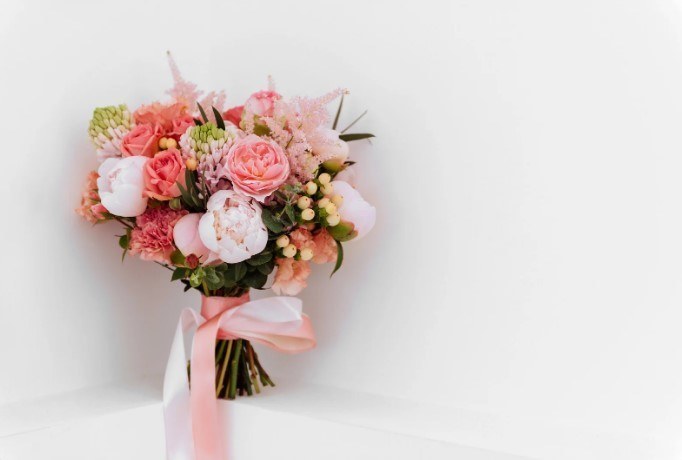
If one flower defines the soft, romantic new-baby look, it is the pink peony. In China, the peony has been called the “king of flowers” for well over a thousand years, and it carries meanings of honor, prosperity, and good fortune. In Western flower language, peonies stand for a happy life and good luck. My Peonika’s own color guide assigns pink peonies to new beginnings and gratitude, which is about as fitting a message for a birth as you will find.
What Makes Peonies Work for a New Mom
Peonies have a light, sweet scent, much softer than lilies or tuberoses. Their pollen sits deep inside layered petals, so it rarely drops onto tables. The blooms also open in stages: a bouquet delivered in tight buds can swell to two or three times its size over four or five days, which gives a tired family something that changes and improves while they adjust to life at home.
The catch is seasonality. Garden peonies in the US bloom naturally from roughly May to June, and imported stems fill parts of the rest of the year. That is why many florists simply stop selling them in fall and winter.
Where to Order Pink Peonies
This is the main reason https://mypeonika.com/ sits at the top of my list for ordering. The studio in Hallandale Beach offers peonies year-round when stock allows, buying stems from growers in the Netherlands, Ecuador, Kenya, Colombia, and other origins. Their peony bouquets come in clear sizes: Small (10 stems), Medium (21), Large (33), XL (50), and XXL (100). For a baby girl, “Forever Sarah Bernhardt” ($115 to $800) is the obvious pick, since Sarah Bernhardt is a classic soft-pink double peony. “Pillow Talk” ($155 to $1,225) leans even more pastel, and the duo “Cotton Candy Lagoon” ($175) pairs peonies with hydrangeas for a cloud-like look. One honest caveat: many peony items sell out out of season, so order a day or two ahead in winter.
2. Light Pink Roses: Gentleness, Admiration, and Joy
Roses are the most reliable flower on this list. They are available every week of the year, they travel well, and their meanings are well documented. Red roses mean romantic love, which is wrong for this occasion. Light pink roses, by contrast, have long symbolized gentleness, admiration, and joy, while deeper pink suggests gratitude and appreciation. A blush rose bouquet tells the new parents you are happy for them without tipping into sentimentality.
Standard Roses vs. Garden Roses
Standard long-stem roses have a high, pointed center and usually little fragrance. Garden roses (sometimes sold as French or David Austin-style roses) are cupped, densely petaled, and often softly scented. For a baby girl, garden roses look more delicate and pair beautifully with peonies or hydrangeas. Standard roses are sturdier and usually less expensive per stem.
Rose Bouquets That Suit the Occasion
My Peonika’s “Pink Expression” uses pink garden roses and comes in 21, 33, 50, 75, or 100 stems, priced from $152 to $635. “Pink Promise” ($155 to $628) is another soft-pink option. For a gift on a budget, “Ethereal Dreams” combines French roses with hydrangeas at $110, and the “Rose Vibes” box ($142 to $575) holds its shape without a vase, which is handy when a hospital room has nowhere to put one.
3. Blush Ranunculus: Radiant Charm in Tight Layers
Ranunculus look like small paper roses wound into perfect spirals, sometimes with more than a hundred thin petals per bloom. In the Victorian language of flowers they meant “I am dazzled by your charms” or “you are radiant with charms,” a lovely line to send to a newborn. Color adds nuance: white ranunculus stand for purity and new beginnings, blush for admiration, and coral for gratitude.
They are nearly scentless and drop very little pollen, which places them among the safest choices for a maternity ward. With good care they last 7 to 10 days. Varieties to know include Elegance, Clooney, Pon-Pon, Picotee (with colored petal edges), and Festival.
Ranunculus vs. Peony: The Commonly Confused Pair
People mix these two up constantly, and online photos do not help. Here is how to tell them apart and why it matters for a gift:
- Size. A ranunculus head is typically 1.5 to 3 inches across. An open peony can reach 6 inches or more.
- Petals. Ranunculus petals are thin, tissue-like, and arranged in tight concentric circles. Peony petals are thicker and ruffled, with a looser, bowl-shaped center.
- Stems. Ranunculus stems are hollow and soft; they bend easily. Peony stems are solid and woody.
- Season. Ranunculus peak in late winter and spring. Peonies peak in late spring and early summer.
- Price. Per stem, ranunculus usually cost less than imported off-season peonies.
The practical takeaway: if you love the peony look but are ordering in November or January, blush ranunculus give you a similar layered softness, more reliably and often for less money.
Ranunculus Arrangements Worth a Look
For pure ranunculus, My Peonika’s mono “Ranunculuses” bouquet comes in 15, 25, 35, or 50 stems ($147 to $480). “Cream Dream Team” ($169 to $281) keeps things pale and creamy, “Pink Champagne” ($252) leans blush, and the “Spring Cutie” flower box ($210) is compact enough for a bedside table. The “Lucky Girl” basket ($272) appears in both their ranunculus and new-baby collections, and the name does half the work of the card for you.
What the Pros Know
Buy ranunculus slightly closed, and wake up tired hydrangeas with a bath. Florists choose ranunculus when the buds still feel a little firm, like a marshmallow, because they open fully in the vase over several days. Trim half an inch at an angle, recut every two to three days, change the water every other day, and use a low, wide vase so the soft stems do not flop. Hydrangeas that droop on day two are usually just thirsty: submerge the whole flower head in cool water for 30 to 45 minutes, then recut the stem. Most bounce back within the hour. Share these tips on the card if the recipient is not a flower person.
4. Pink Hydrangeas: Heartfelt Gratitude in a Single Stem
A single hydrangea stem can fill half a vase, which makes it the most economical way to create volume. In Japan, hydrangeas are linked to heartfelt emotion and gratitude; one well-known story tells of a Japanese emperor who sent hydrangeas to the family of a woman he loved as an apology for neglecting them. Pink hydrangeas in modern flower language usually signify sincere feeling and grace.
Here is a fact most people don’t know: the color of many garden hydrangeas (Hydrangea macrophylla) depends on soil chemistry. In acidic soil, the plant takes up aluminum and blooms blue; in neutral or alkaline soil, it turns pink. Cut-flower growers manage this deliberately to produce the clean pastel pinks you see in bouquets.
Hydrangea Strengths and Weaknesses
Hydrangeas carry almost no scent and very little loose pollen. Their weakness is water: they drink heavily and can wilt fast in a hot car or a dry room. For hospital deliveries, choose an arrangement with a hydration source at the stems rather than a loose wrapped bunch.
“Heaven Hydrangea” ($131 to $550) is My Peonika’s hydrangea-forward bouquet. Hydrangeas also anchor several mixed designs, including “Ethereal Dreams” and “Cotton Candy Lagoon,” mentioned above.
5. Baby’s Breath: Innocence and Everlasting Love
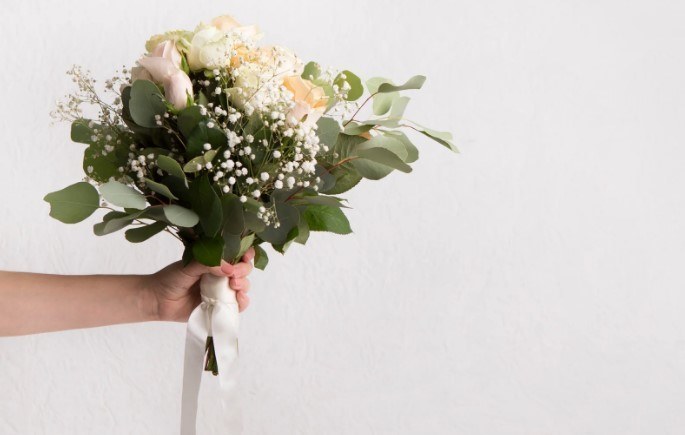
Gypsophila, better known as baby’s breath, has small white flowers grouped in airy clouds. The name is hard to beat for this occasion, and the symbolism matches: purity, innocence, and everlasting love. It is a traditional filler in wedding bouquets for the same reasons.
Two honest notes. Some people find the scent of fresh gypsophila slightly musty up close, so keep it as an accent rather than a full bouquet if the room is small. And it dries well: hang a few stems upside down for two weeks and the parents have a keepsake that lasts for years, which some families tuck into a baby book.
Baby’s breath looks best surrounding pink roses or ranunculus, where it softens the edges and makes the arrangement look larger. If you want a custom mix built around it, an “Artist’s Choice” bouquet lets you set the budget ($116 to $365) and the palette, so you can ask for blush, white, and lots of baby’s breath.
6. Lisianthus: Appreciation and a Quiet Rose Lookalike
Lisianthus (Eustoma) is the flower people photograph and then ask, “What kind of rose is that?” Its ruffled, cup-shaped blooms really do resemble roses, especially in pale pink, lavender, and white. The plant is native to warm grasslands in the southern United States, Mexico, and northern South America, where it was once called prairie gentian.
Lisianthus symbolizes appreciation, gratitude, and charisma. It has almost no scent, and each stem carries multiple buds that open one after another. A healthy stem can last up to two weeks in a vase, longer than most roses. That staggered opening keeps a bouquet fresh-looking well after the first visitors leave.
Lavender lisianthus is a smart way to move beyond pink while staying soft. Lilac and powder tones are part of the broader trend toward gentle palettes that florists have been leaning into, and they suit parents who want something less predictable than all-pink.
7. Pink Orchids: Grace, Love, and a Gift That Keeps Blooming
Orchids work differently from every other flower here. A potted Phalaenopsis (moth orchid) can hold its blooms for two to three months, sometimes longer, with a light watering about once a week. For parents who will barely remember to eat during the first month, that low demand is a real gift.
Orchids have stood for love, beauty, and refinement since antiquity; pink orchids in particular are associated with grace and joy. They are virtually scentless in the common varieties and do not shed pollen, since orchid pollen is packed into small waxy clusters. Their only real drawback is visual: a single orchid stem can look formal next to a fluffy bouquet. Pair it with a soft arrangement, or choose it for the second week, when the first round of cut flowers is fading.
Flowers to Avoid for a Baby Girl’s Arrival
A personal example explains this section better than any rule. When my sister had her daughter, I sent a large mixed arrangement from a local shop I had never used before. It arrived with three open Stargazer lilies at the center. Within an hour the small postpartum room smelled like a perfume counter, and orange pollen had already dusted the white tray table. A nurse kindly suggested we move the flowers into the hallway. The bouquet was beautiful, and it was the wrong gift. The next time, for a friend’s baby girl, I chose a small box of blush ranunculus and garden roses. It sat on the windowsill all week and went home with them.
Based on that experience and common hospital guidance, here is what to skip:
- Lilies. Strong fragrance, heavy pollen, and highly toxic to cats, which matters once the flowers go home.
- Tuberose, hyacinth, and gardenia. Lovely scents, but intense in small rooms.
- Tall, top-heavy designs. They tip over on narrow tables and block the view of the bassinet.
- Any flowers for the NICU. Many neonatal intensive care units do not allow fresh flowers at all. Call the hospital first, or send the gift to the family’s home.
Thoughtful florists build this into their new-baby lines. My Peonika’s guidance for baby girls specifically leans on pink roses, blush ranunculus, hydrangeas, and pink balloons, and it steers away from the heavily scented, high-pollen flowers like lilies, with compact arrangements sized for hospital rooms.
Quick Summary: Best Flowers to Welcome a Baby Girl at a Glance
- Pink peonies: prosperity, new beginnings; light scent; peak May to June; 5 to 7 days in the vase.
- Light pink roses: gentleness, admiration, joy; year-round; easy care.
- Blush ranunculus: radiant charm; nearly scentless; 7 to 10 days; best late winter and spring.
- Pink hydrangeas: heartfelt gratitude; big volume per stem; needs steady water.
- Baby’s breath: innocence, everlasting love; best as an accent; dries into a keepsake.
- Lisianthus: appreciation; rose lookalike; up to two weeks.
- Pink orchids: grace and love; potted plants bloom for months.
Our Recommendation: Match the Bouquet to the Setting
The best flowers to welcome a baby girl are the ones that suit the room they land in, so the setting should decide the flower more than the meaning does. For a hospital visit in the first 48 hours, choose something compact and low-scent: a ranunculus or rose box, or a small arrangement such as “Tender Pink Tranquility” ($187) or “Little Wonder” ($131). For delivery to the family’s home a week later, go bigger and more romantic with peonies or a garden-rose bouquet, when there is finally space on the dining table.
Make a full gift of it if the budget allows. The “Hello, Little One” gift set runs $257 to $490, and the “Welcome New Baby” set adds balloons to the bouquet for $382 to $429. Add-ons such as a giant teddy bear ($94) or a tea duo ($41, a thoughtful nod to the parents) round things out. You can browse the full range of new baby girl flowers to compare the soft palettes side by side.
My own preference for ordering in South Florida is My Peonika, for practical reasons I can point to. Orders placed by 5 PM go out the same day, seven days a week, across Miami, Miami Beach, Brickell, Coral Gables, Aventura, Hollywood, Pembroke Pines, and nearby neighborhoods, including Miami-area hospitals. Each bouquet is assembled shortly before it leaves the studio and travels in an aqua hydration pack inside a protective box, with flower food, care instructions, and a complimentary card. Delivery is free on orders of $190 or more within 10 miles, and a 3-Day Freshness Guarantee replaces a bouquet that wilts within three days when the care instructions are followed. For a gift that lands in a hospital room where nobody has time to troubleshoot, those details count.
Frequently Asked Questions
What color flowers are best for a baby girl?
Blush and pale pink are the most common choices, but white, cream, lilac, peach, and soft coral all work well. White flowers stand for new beginnings and purity, peach and coral suggest joy and gratitude, and lavender adds a gentle twist for parents who prefer to avoid all-pink.
Can you send flowers to a maternity ward?
Most maternity and postpartum units allow fresh flowers, but many NICUs and some intensive care areas do not. Call the hospital’s front desk before ordering. If flowers are restricted, send them to the family’s home timed for the day they are discharged.
How long should I wait to send flowers after a baby is born?
There is no strict rule. Flowers sent within the first two or three days arrive during the happy rush of visitors. A second bouquet two to three weeks later, when visits slow down, is often appreciated even more.
How much should I spend on new baby flowers?
A thoughtful bouquet usually costs between $100 and $200 from a quality florist, based on typical US pricing. Close family often spends more, especially on gift sets with balloons or plush toys. A small, well-chosen arrangement is always better than a large one that does not fit the room.

Are any flowers unsafe to have around a newborn?
Avoid strongly scented and high-pollen flowers such as lilies, which can irritate sensitive airways and are dangerous to cats. Keep any arrangement out of the baby’s reach, and remove it once petals begin to drop or the water turns cloudy.